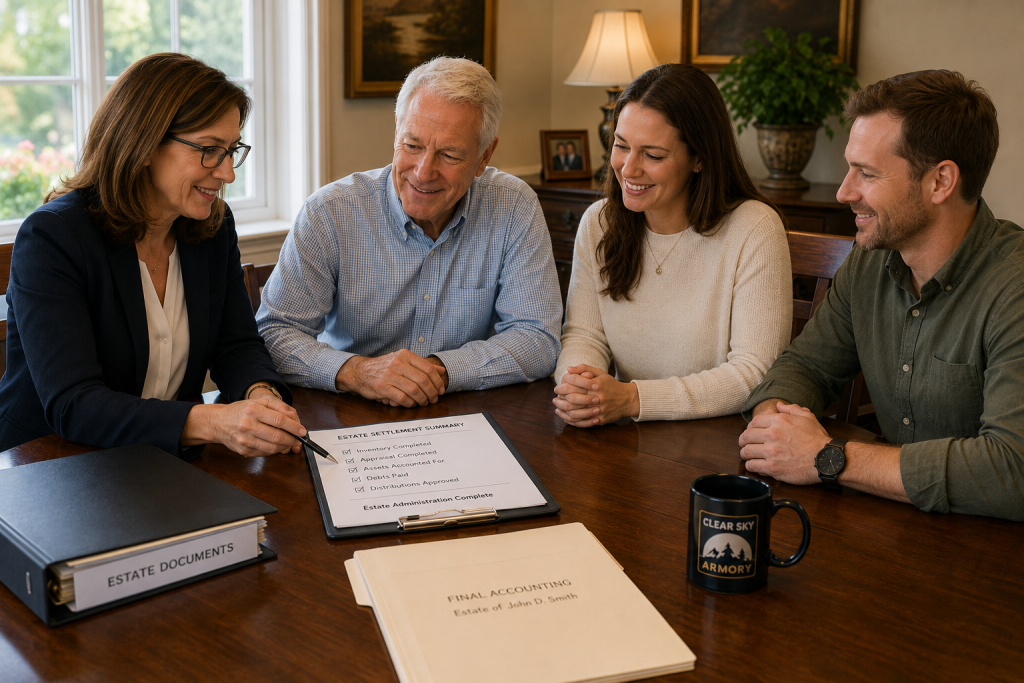
Serving as the executor of an estate comes with significant responsibilities. When firearms are involved, many executors find themselves navigating unfamiliar territory.
Questions often arise immediately:
- What should I do with the firearms?
- Can I transport them?
- Can beneficiaries inherit them?
- Should they be appraised?
- How do I sell them legally?
If you are serving as an executor in California and have discovered firearms as part of an estate, this guide will help you understand the basic process and avoid common mistakes.
Step 1: Ensure Firearms Are Secure
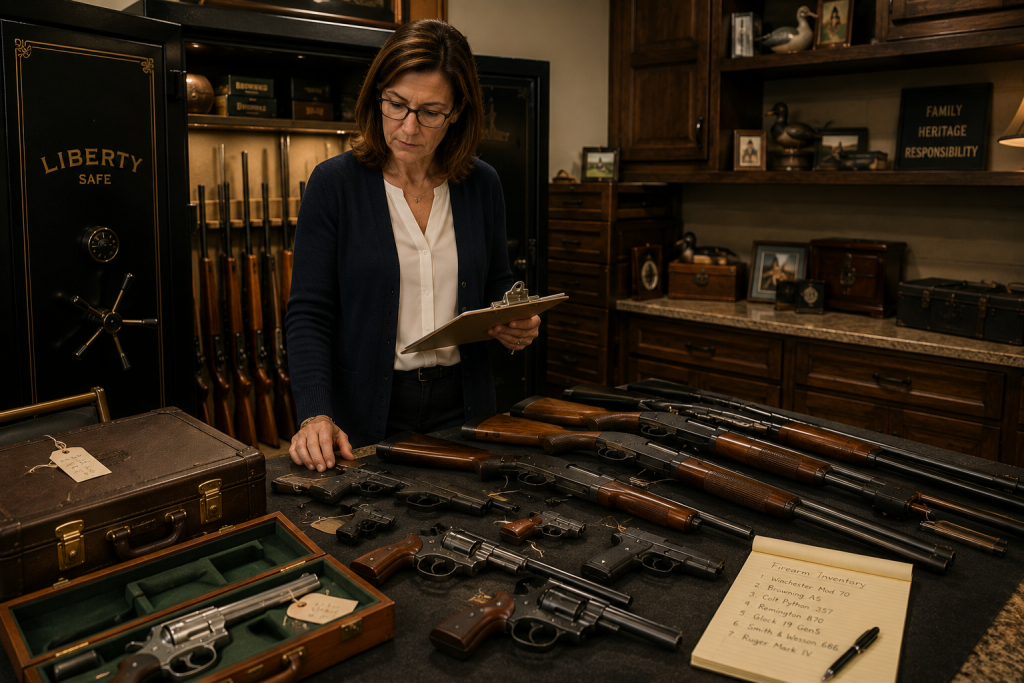
The first priority is safety and security.
If firearms are located in the decedent’s home:
- Leave them secured if possible.
- Restrict access to authorized individuals.
- Avoid distributing firearms before understanding ownership and legal requirements.
- Keep ammunition stored separately if practical.
Many executors are unfamiliar with firearms, and that’s perfectly normal. The goal is simply to maintain control of the collection until appropriate decisions can be made.

Step 2: Create an Inventory
Before making decisions, document what is present.
A basic inventory should include:
- Manufacturer
- Model
- Serial number
- Type of firearm
- General condition
Photographs are extremely helpful.
Take clear photos of:
- Both sides of each firearm
- Manufacturer markings
- Model markings
- Serial numbers
- Accessories and optics
This information will be useful for appraisals, estate administration, insurance, and potential transfers.
Click here for your free firearms inventory worksheet –> Executive Firearms Inventory Worksheet
Step 3: Determine Whether the Firearms Have Significant Value
Many executors assume firearms have either little value or tremendous value.
The truth is usually somewhere in between.
A collection may contain:
- Common hunting rifles
- Modern sporting firearms
- Collector firearms
- Military surplus firearms
- Rare revolvers
- California off-roster handguns
Some firearms that appear ordinary can have substantial collector value.
Obtaining an appraisal before making decisions can help prevent costly mistakes.
California Off-Roster Handguns Can Affect Estate Value
California has unique firearm market conditions.
Certain handguns that are difficult for California residents to purchase through normal retail channels are known as off-roster handguns.
Examples may include:
- Certain Gen 5 Glock models
- Staccato pistols
- Various SIG Sauer models
- Shadow Systems pistols
Because supply is limited, some off-roster handguns may command significantly higher prices in California than they would elsewhere in the country.
For this reason, executors should avoid assuming that national pricing guides accurately reflect California market values.
Step 4: Identify the Beneficiaries
Review the estate planning documents to determine who is entitled to the firearms.
Depending on the circumstances:
- Firearms may pass to named beneficiaries.
- Firearms may become part of the residuary estate.
- Firearms may need to be sold and converted to cash for distribution.
An estate attorney can help determine how the governing documents apply.
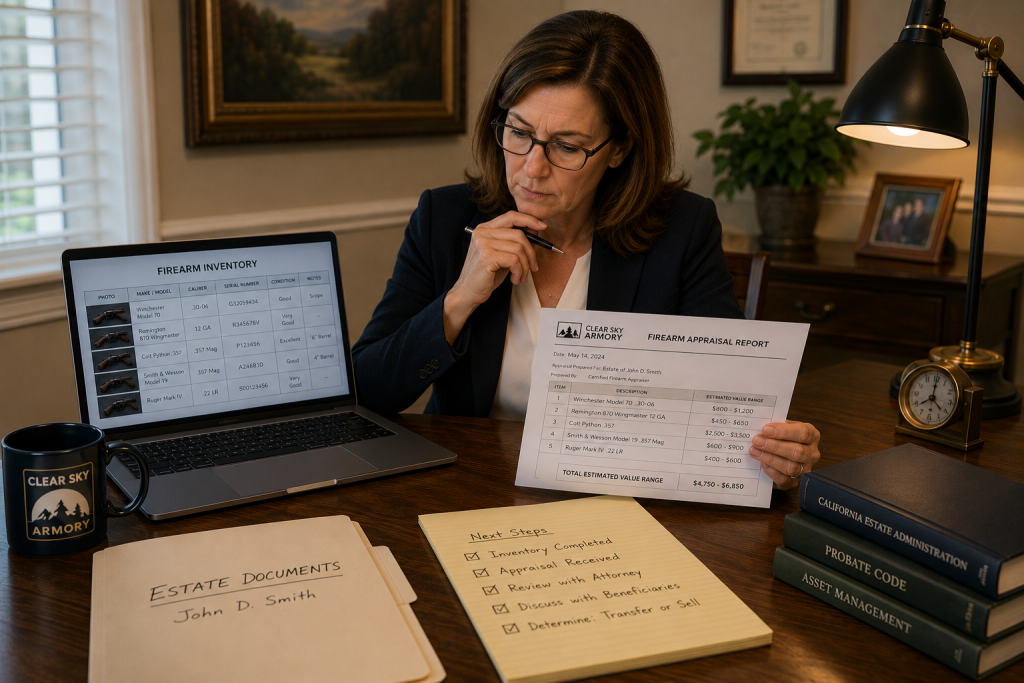
Step 5: Consider an Independent Appraisal
An appraisal can help an executor:
- Understand estate assets
- Support equitable distribution
- Document value for beneficiaries
- Identify collectible firearms
- Evaluate sale versus consignment options
Many executors find that an independent appraisal provides valuable documentation and reduces potential disagreements among beneficiaries.
Step 6: Decide Whether to Transfer or Sell
Once the collection has been evaluated, the executor generally has two options.
Transfer to Beneficiaries
Beneficiaries may choose to retain the firearms if legally eligible.
California and federal laws govern firearm transfers, so appropriate procedures must be followed.
Sell the Collection
Many estates choose to liquidate firearm collections and distribute cash proceeds.
Benefits include:
- Simpler administration
- Easier division among beneficiaries
- Reduced storage concerns
- Faster estate closure
Common Executor Mistakes
Distributing Firearms Too Quickly
Take time to understand what is in the collection before making decisions.
Assuming All Firearms Have Similar Value
Values can vary dramatically from one firearm to another.
Ignoring California Market Conditions
Certain firearms may have significantly different values within California.
Failing to Document the Collection
Good records protect both the executor and the beneficiaries.
Accepting the First Offer
Understanding value before selling helps ensure informed decisions.
Frequently Asked Questions
Can an Executor Transport Firearms?
In many situations, yes. However, firearms should be transported safely and in compliance with applicable laws.
Can Beneficiaries Inherit Firearms?
Often they can, assuming they are legally eligible to possess firearms and all applicable legal requirements are met.
Should the Collection Be Appraised?
For many estates, an appraisal is highly recommended before any transfer or sale decisions are made.
What If the Executor Knows Nothing About Firearms?
This is extremely common.
Many executors have little or no firearm experience. Professional assistance can help simplify the process.
What If There Are Dozens or Hundreds of Firearms?
Large collections are not unusual.
A structured inventory and appraisal process can help organize even substantial collections.
How Clear Sky Armory Can Help
Clear Sky Armory works with executors, trustees, estate attorneys, beneficiaries, and families throughout Northern California.
Our process begins with photographs and collection information. We then connect clients with an independent appraisal service so they can understand the collection before making decisions.
Whether the estate contains one firearm or an entire collection, we can help guide the process in a professional, respectful manner.
Areas We Serve
We assist clients throughout:
- Plumas County
- Lassen County
- Modoc County
- Sierra County
- Nevada County
- Yuba County
- Sutter County
- Placer County
- Sacramento County
- Shasta County
- Tehama County
- Santa Clara County
- Alameda County
- Contra Costa County
- San Joaquin County
Next Steps
If you are serving as an executor and have discovered firearms as part of an estate, begin by documenting the collection and gathering photographs.
You may also find these resources helpful:
- What to do when you inherit guns
- How much is my gun collection worth?
- How Firearms Collection Are Appraised
- Sell vs. Consign a Gun Collection: Which Option Is Right for You?

Understanding what the collection contains is the first step toward making informed decisions and fulfilling your responsibilities as executor.
You can learn more about inherited firearms at our Inherited Firearms Resource Center
OR request an unbiased 3rd party appraisal here