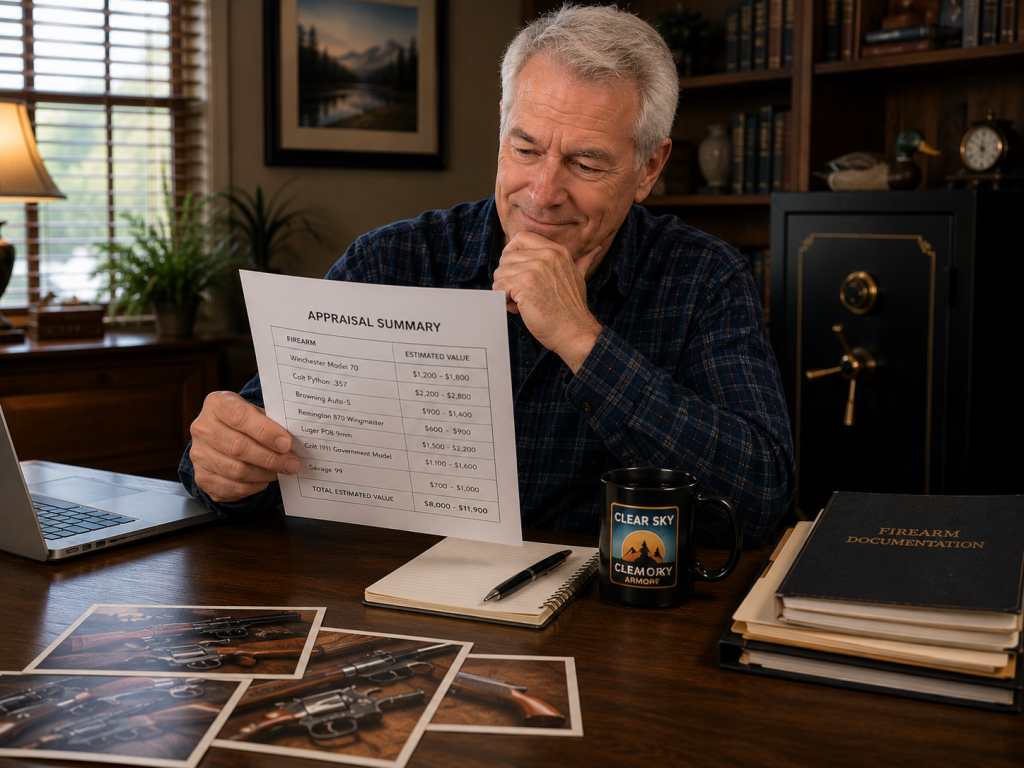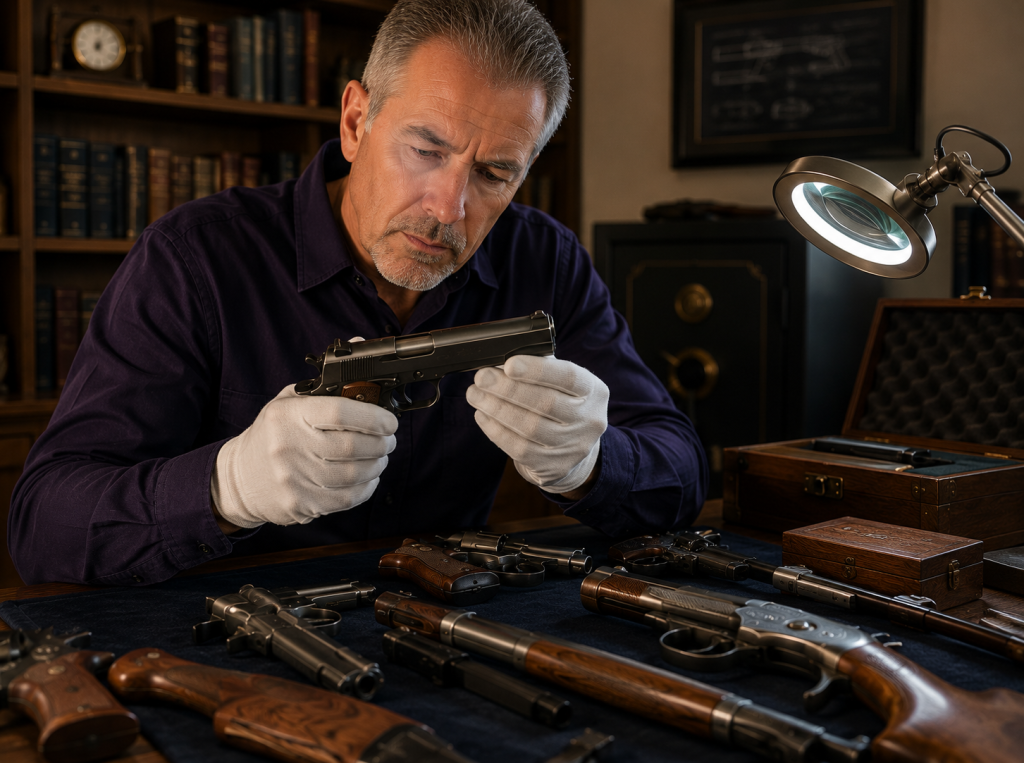
If you have inherited a firearm collection, one of the most important steps you can take is obtaining a professional appraisal.
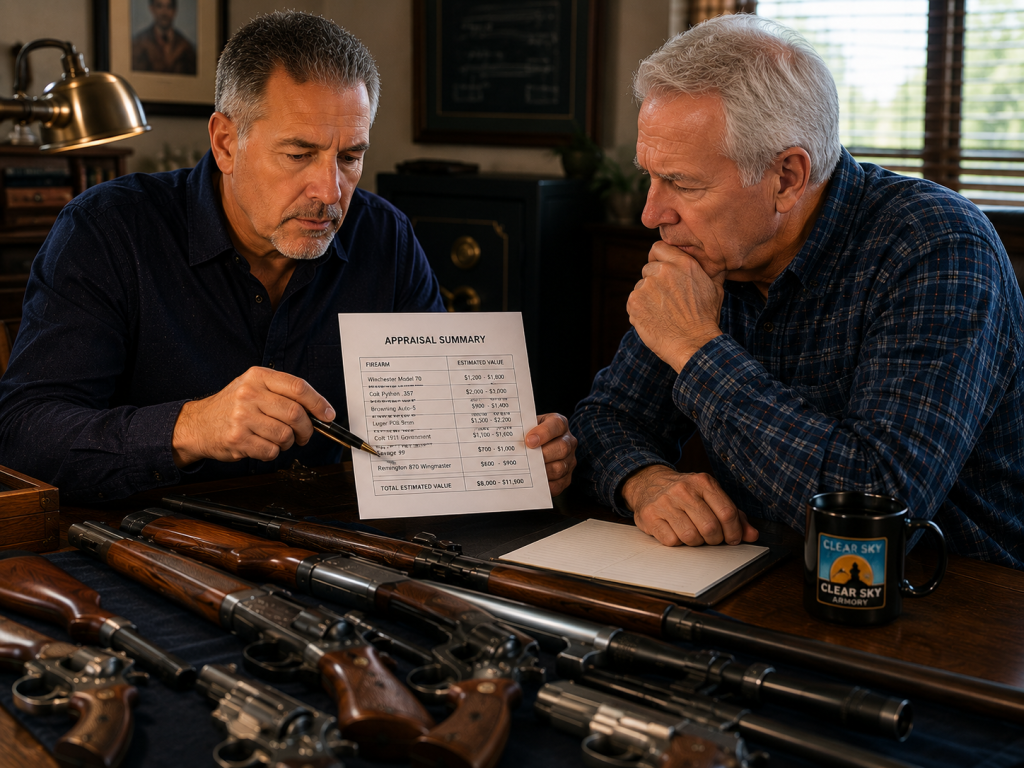
Many people are surprised to learn that firearm appraisals involve much more than simply looking up prices online. Experienced appraisers evaluate numerous factors that affect value, including condition, rarity, originality, historical significance, and current market demand.
Understanding how firearm collections are appraised can help you make informed decisions before selling, consigning, or distributing firearms among family members.
Why Appraisals Matter
A professional appraisal helps answer one critical question:
“What is this collection actually worth?”
Without an appraisal, it can be difficult to know whether:
- An offer is fair
- Certain firearms have collector value
- The estate is being distributed equitably
- A firearm should be sold, retained, or consigned
Many firearm owners and beneficiaries discover that some firearms are worth considerably more—or less—than they expected.
The Appraisal Process
Most professional firearm appraisals follow a structured process.
Step 1: Inventory the Collection
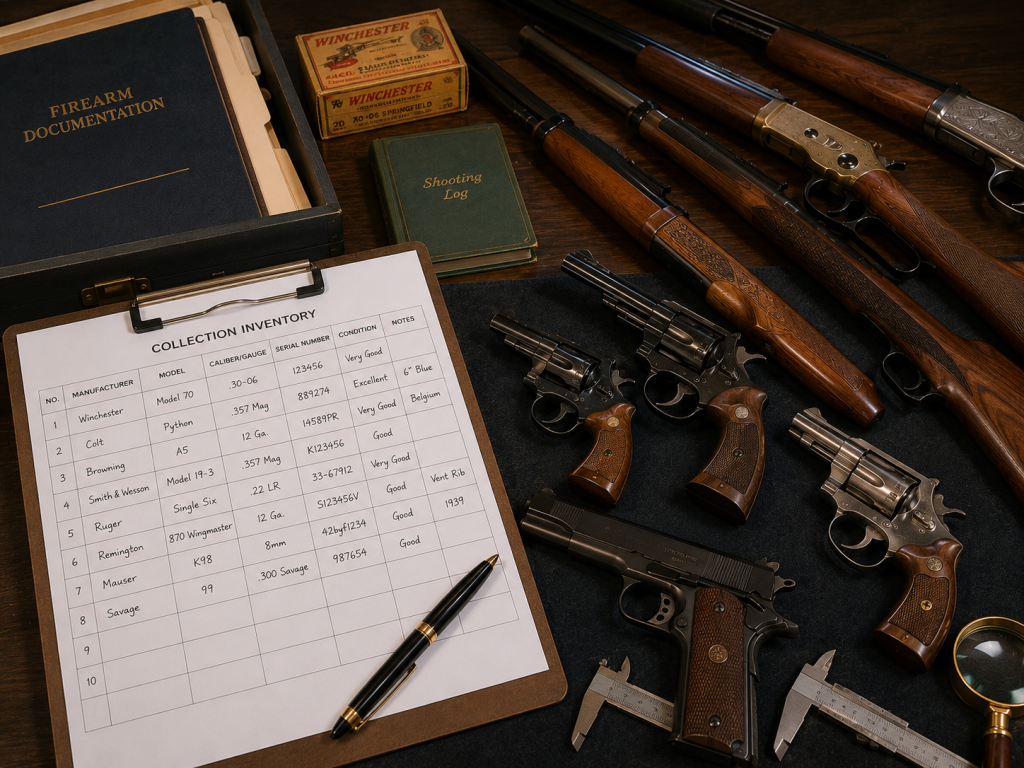
The first step is creating an inventory of the firearms.
Information typically includes:
- Manufacturer
- Model
- Serial number
- Caliber or gauge
- Barrel length
- Configuration
- Accessories
Photographs are usually collected at this stage as well.
Step 2: Evaluate Condition
Condition is one of the most important factors affecting value.
Appraisers evaluate:
- Finish wear
- Rust or corrosion
- Mechanical function
- Bore condition
- Stock condition
- Signs of modification
A firearm in excellent original condition may be worth significantly more than the same model in average condition.
Originality Matters
Collectors often place a premium on originality.
Appraisers look for:
- Original stocks
- Original sights
- Factory finishes
- Matching serial-numbered parts
- Original accessories
Even well-intentioned modifications can sometimes reduce collector value.
Researching Market Values
Professional appraisers typically rely on multiple data sources.
These may include:
- Recent auction results
- Industry pricing databases
- Collector markets
- Dealer sales data
- Historical sales records
The goal is to determine realistic fair market value based on actual market activity rather than asking prices.
Rare and Collectible Firearms
Some collections contain firearms that require additional research.
Examples include:
- Early Winchester rifles
- Military surplus firearms
- Commemorative firearms
- Limited-production models
- Historical firearms
- Collector-grade revolvers
These firearms may require specialized expertise to properly evaluate.
California Off-Roster Handguns
California presents a unique situation that can significantly affect firearm values.
Certain handguns that are commonly available in other states are considered “off-roster” in California and may be difficult for California residents to acquire through traditional retail channels.
As a result, some off-roster handguns may command substantially higher prices within California than they do elsewhere in the country.
Examples may include:
- Certain Gen 5 Glock models
- Staccato pistols
- Various modern SIG Sauer models
- Shadow Systems pistols
- Limited-production handguns
Because of these California-specific market conditions, appraisers should consider both national and California market factors when evaluating handgun collections.
Estate and Family Considerations
Appraisals are frequently used during estate administration.
An appraisal can help:
- Executors understand estate assets
- Trustees document collection values
- Family members divide assets fairly
- Beneficiaries make informed decisions
Having a neutral third-party appraisal often reduces uncertainty and disagreements among family members.
What Information Should You Provide?
To obtain the most accurate appraisal possible, gather:
- Clear photographs
- Manufacturer markings
- Model information
- Serial numbers
- Documentation
- Original boxes
- Accessories
- Any known history of ownership
The more information available, the more accurate the appraisal is likely to be.
Common Appraisal Mistakes
Relying Only on Internet Searches
Many online listings reflect asking prices rather than actual selling prices.
Assuming Insurance Value Equals Market Value
Insurance values and fair market values are often different.
Ignoring California Market Conditions
Certain firearms may have significantly different values within California.
Selling Before Understanding Value
Accepting an offer before understanding the collection can lead to missed opportunities.
What Happens After the Appraisal?
Once the appraisal is complete, most people choose one of three paths:
Keep the Collection
Some families decide to retain all or part of the collection.
Sell the Collection
Others prefer a straightforward sale process.
Consign the Collection
Certain collectible firearms may benefit from a consignment strategy designed to maximize value.
How Clear Sky Armory Can Help
Clear Sky Armory works with firearm owners, families, trustees, and beneficiaries throughout Northern California.
Our process begins with photographs and collection information. We then connect clients with an independent appraisal service so they can better understand what they have before making decisions.
Whether the collection contains one firearm or one hundred, obtaining an appraisal is often the most important first step.
Next Steps
If you have inherited firearms and are unsure of their value, begin by documenting the collection and gathering photographs.
You may also find these resources helpful:
- What To Do When You Inherit Guns In California
- How Much Is My Gun Collection Worth?
- Sell vs. Consign a Gun Collection
Understanding value first can help ensure you make informed decisions with confidence.
You can learn more about inherited firearms at our Inherited Firearms Resource Center
OR request an unbiased 3rd party appraisal here