

Inheriting firearms can be overwhelming, especially if you are not familiar with guns, California firearms laws, or the options available to you. Many people suddenly find themselves responsible for a collection of firearms after the passing of a spouse, parent, grandparent, or other loved one and are unsure where to begin.
The good news is that you do not need to be a firearms expert to handle the situation properly. By taking a few simple steps, you can protect yourself, preserve the value of the collection, and determine the best path forward.
Step 1: Make Sure the Firearms Are Secure
The first priority is safety.
If firearms are located in a home, cabin, safe, or vehicle, make sure they are stored securely and inaccessible to unauthorized individuals, especially children.
If the firearms are already secured in a gun safe or locked cabinet, leave them there until you have had an opportunity to inventory and evaluate the collection.
Avoid transporting firearms until you understand what is in the collection and what legal requirements may apply.

Step 2: Create a Basic Inventory
Before making any decisions, create a list of the firearms.
For each firearm, record:
- Manufacturer
- Model
- Serial Number
- Caliber or Gauge
- General Condition
If you are unsure how to identify a firearm, take several clear photographs including:
- Left side of the firearm
- Right side of the firearm
- Serial number
- Manufacturer markings
- Any accessories or optics
Photographs are often enough for professionals to identify the firearm and provide preliminary guidance.
Step 3: Do Not Assume You Know the Value
One of the most common mistakes people make is assuming that all firearms are either extremely valuable or worth very little.
In reality, values vary significantly based on:
- Manufacturer
- Model
- Condition
- Rarity
- Age
- Historical significance
- Collector demand
Two firearms that appear nearly identical may differ in value by thousands of dollars.
Before selling, consider obtaining a professional appraisal so you understand what you have.
Step 4: Understand Your Options
Most people who inherit firearms have three primary options.
Keep the Firearms
Some families choose to retain firearms for sentimental reasons, recreational use, hunting, or future inheritance.
Sell the Firearms
Selling may be appropriate when the firearms are no longer needed or when the estate requires liquidation of assets.
Consign the Firearms
Consignment allows a dealer to market and sell the firearms on your behalf. While it may take longer than an outright sale, consignment can sometimes produce a higher return.
The right option depends on your goals, timeline, and the nature of the collection.
Step 5: Consider a Professional Appraisal
A professional appraisal provides an objective assessment of value and can help you make informed decisions.
An appraisal may be especially useful when:
- The collection contains numerous firearms
- The estate involves multiple beneficiaries
- There is uncertainty regarding value
- You are considering consignment
- The collection may contain collectible firearms
Having an independent appraisal can help ensure that all parties understand the value of the collection before any decisions are made. To learn more more about how professionals appraise firearms, read this article How Firearms Collection Are Appraised
Step 6: Learn the California Requirements
California has specific laws governing firearm ownership, transfers, and sales.
Requirements may vary depending on:
- Relationship to the deceased
- Type of firearm
- Whether the firearm is classified as a handgun or long gun
- Whether the firearm is transferred, sold, or retained
Because every situation is unique, it is important to ensure that any transfer or sale is handled in compliance with applicable laws and regulations.
Step 7: Decide Whether to Sell or Consign
Many families ultimately decide to sell all or part of an inherited collection.
When evaluating your options, consider:
- How quickly you need funds
- Whether maximizing value is your primary goal
- The size of the collection
- The amount of time you wish to invest
An outright purchase generally provides the fastest path to payment, while consignment may provide higher returns for certain firearms.
You can dig deeper into the pros and cons of selling versus consignment in this article Sell vs. Consign a Gun Collection: Which Option Is Right for You?
Common Mistakes to Avoid
Selling Before Understanding Value
Always understand what you have before accepting an offer.
Throwing Away Documentation
Original boxes, manuals, receipts, and historical records may increase value.
Cleaning Collectible Firearms
Improper cleaning can sometimes reduce collector value.
Assuming Every Firearm Has the Same Value
Values vary widely, even among firearms from the same manufacturer.
Delaying Too Long
Waiting years to address an inherited collection can create storage, documentation, and estate administration challenges.
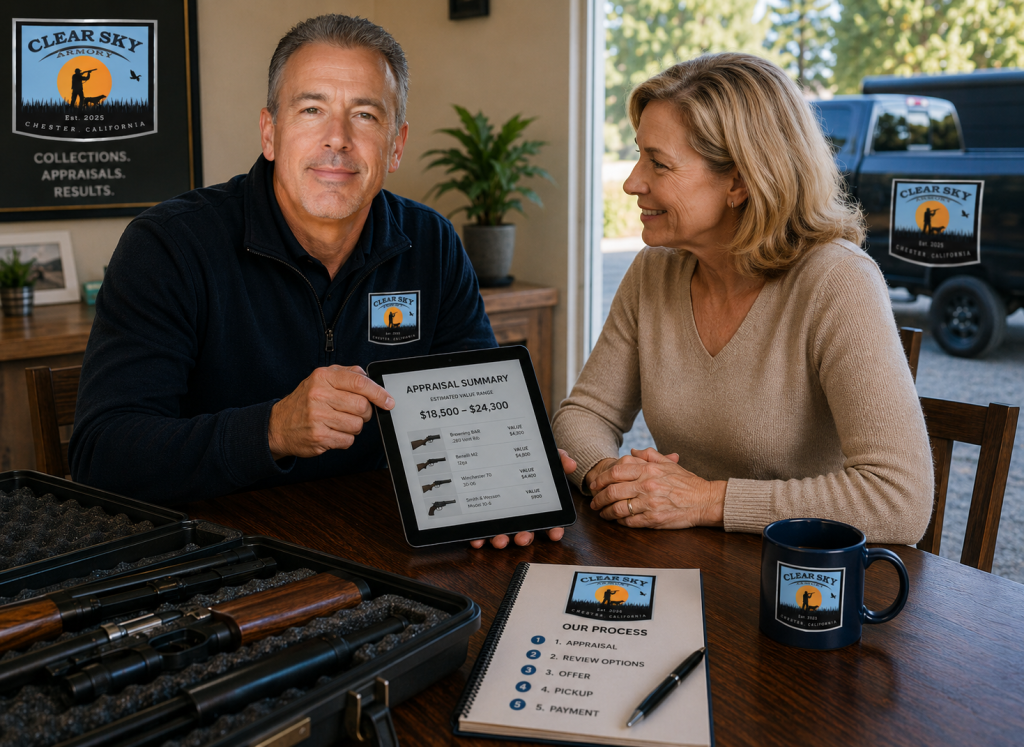
How Clear Sky Armory Can Help
Clear Sky Armory works with individuals and families throughout Northern California who have inherited firearms and need guidance.
Our process is designed specifically for people who may know little about firearms:
- Submit photographs and basic information.
- Obtain an independent appraisal.
- Review your options.
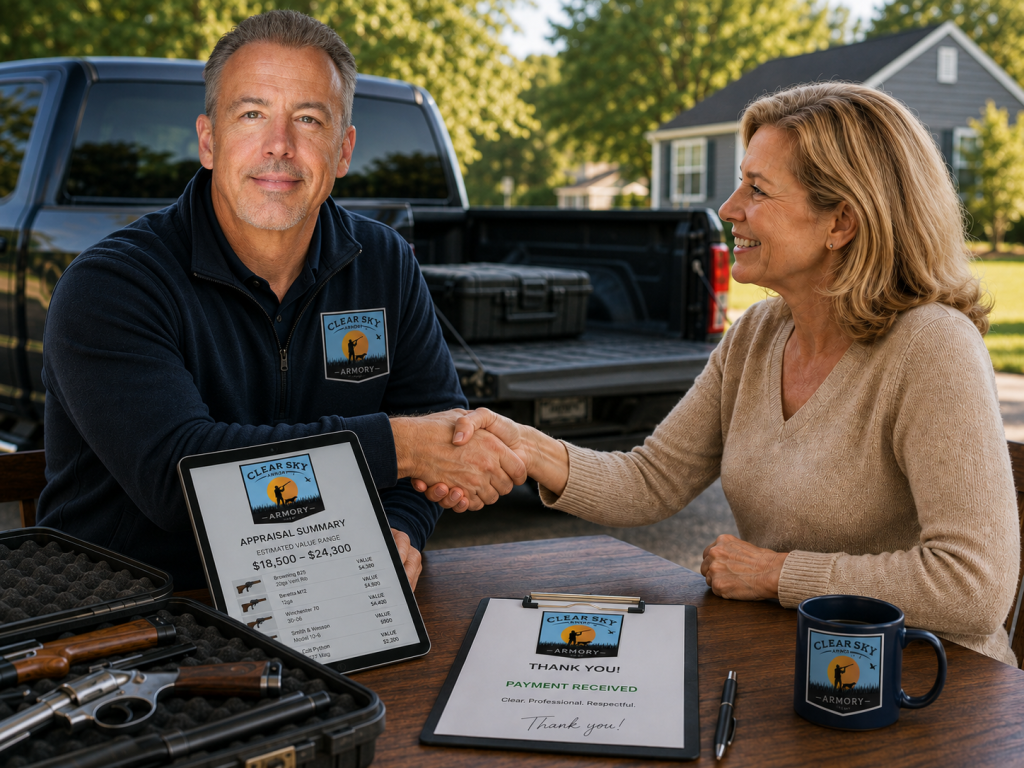
- Receive an offer if you decide to sell.
- Arrange convenient pickup if an offer is accepted.
Whether you inherited a single firearm or an entire collection, we can help you understand your options and make informed decisions.
Click Here to Get Started
If you have inherited firearms and would like to learn more about their value, start by documenting the collection and gathering photographs. The sooner you understand what you have, the easier it becomes to decide whether to keep, sell, or consign the collection.
You can learn more about inherited firearms at our Inherited Firearms Resource Center
OR request an unbiased 3rd party appraisal here